5 Facts About Neuromyelitis Optica Spectrum Disorder (NMOSD) You Need to Know. Neuromyelitis Optica Spectrum Disorder (NMOSD) is a rare autoimmune disease of the central nervous system. In this condition, the immune system becomes overactive and damages the optic nerve(s) and/or the spinal cord. This can lead to vision loss and (partial) paralysis.
In this blog, you will discover 5 essential facts about NMOSD to help you understand this condition better. Did you know these facts?
5 Facts About Neuromyelitis Optica Spectrum Disorder (NMOSD)
1. NMOSD is an Umbrella Term
Neuromyelitis Optica Spectrum Disorder (NMOSD) is also known as NMO spectrum disorder. It is an umbrella term used for:
- NMO: A condition where both the optic nerve(s) and the spinal cord are affected.
- Optic Neuritis or Myelitis: A condition where either the optic nerve(s) or the spinal cord is affected.
5 Facts About Neuromyelitis Optica Spectrum Disorder (NMOSD)
2. It is Not the Same as Multiple Sclerosis (MS)
For a long time, NMOSD was considered a variant of Multiple Sclerosis (MS). However, they are two distinct diseases, though they share some similarities. In general, NMOSD attacks are more severe than those in MS. The disease is characterized by an unpredictable and relapsing course. While most patients recover partially (or even significantly) between attacks, some unfortunately experience permanent vision loss or lasting neurological symptoms.
5 Facts About Neuromyelitis Optica Spectrum Disorder (NMOSD)
3. A Change of Name
Did you know that the discoverer of Neuromyelitis Optica was the physician Dr. Eugène Devic? Until the 18th century, the condition was consistently called Devic’s Disease. Even today, this name is still occasionally used. Although the name has changed several times over the years, NMO and NMOSD are now the most commonly used terms.
4. It is an Extremely Rare Condition
NMOSD is a serious and rare autoimmune disease. Because it is so uncommon, there are only about 200 patients living in the Netherlands. Worldwide, there are approximately 250,000 people living with this disease. (I live with this condition myself.)
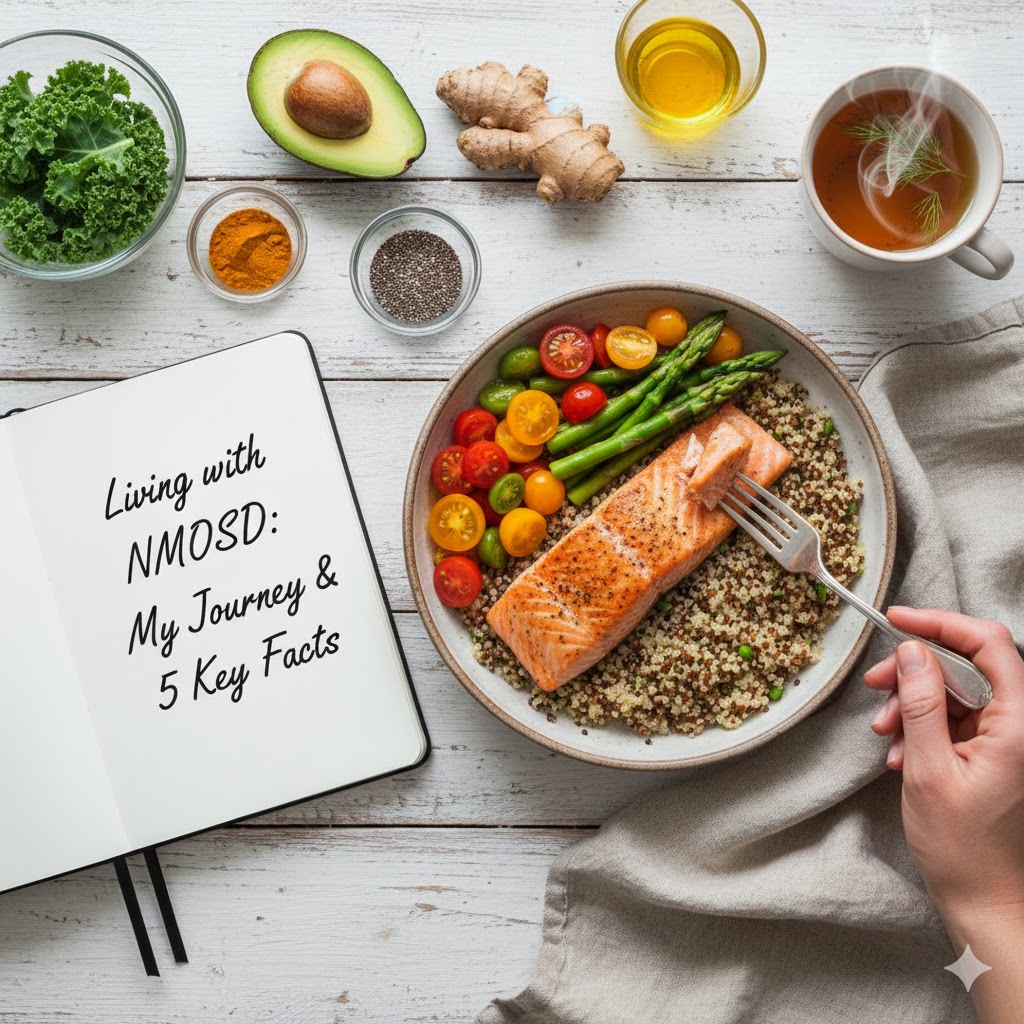
5. An Anti-Inflammatory Diet Can Be Beneficial
This last fact is perhaps the most interesting: food does more than just provide fuel. There is a growing body of evidence suggesting that an anti-inflammatory diet helps manage the symptoms of (severe) autoimmune diseases. Since NMOSD is still relatively unknown, specific research into diet is limited, but research into the effect of nutrition on autoimmune diseases in general is increasing.
Scientific studies suggest that an anti-inflammatory diet can be very useful. In such a diet, you avoid foods known to trigger the immune system and focus on foods with anti-inflammatory properties. This means avoiding products that provoke allergic reactions or inflammatory processes.
5 Facts About Neuromyelitis Optica Spectrum Disorder (NMOSD)
Which foods can cause inflammation?
Common foods linked to inflammation include:
- Refined sugar
- Gluten-containing grains
- Artificial sweeteners and certain additives (E-numbers)
- Trans fats
- Legumes
- Pastries and cookies
- Dairy products
The information shared on this blog is based on my personal experience and general research. I am not a medical professional. Always consult your doctor or a qualified specialist before making changes to your treatment or diet. This content is for informational purposes only.
Gerelateerde berichten:
 Life Expectancy with NMO, NMOSD and Devic’s
 NMOSD When Medication Isn’t Enough to Stop the Fire
 How fast can NMOSD develop? Symptoms and Recovery
 What is Visual Snow Syndrome? Symptoms, Causes, and the Power of Nutrition
 Living with NMOSD: My Journey to Recovery
 Optic Neuritis Symptoms & Recovery with NMOSD