My Journey to Recovery from NMOSD and Devic’s Disease.
Neuromyelitis Optica Spectrum Disorder (NMOSD): Managing Autoimmunity with Nutrition
Neuromyelitis Optica Spectrum Disorder (NMOSD) is also commonly known as Devic’s disease. NMOSD is a term used for N.M.O. involving both optic neuritis and myelitis. The term is also applied to N.M.O. as a relapsing condition.
NMOSD is a rare and chronic autoimmune disease that affects the optic nerve and the spinal cord. Some people may experience a single attack with minimal lasting symptoms. However, an increasing number of patients experience multiple attacks followed by periods of remission. The period of rest between these attacks can last weeks, months, or even years. I have N.M.O. myself, and my attacks occurred very shortly after one another. This was incredibly difficult because I didn’t have enough time to recover between these “storms” of my immune system.
Both physically and mentally, I found very little peace during this period. Time and again, I had to deal with an overactive immune system. I experienced this time as hectic, rushed, and overwhelming. It felt like I had barely left the hospital before being readmitted with new symptoms. Is this something you recognize as well?
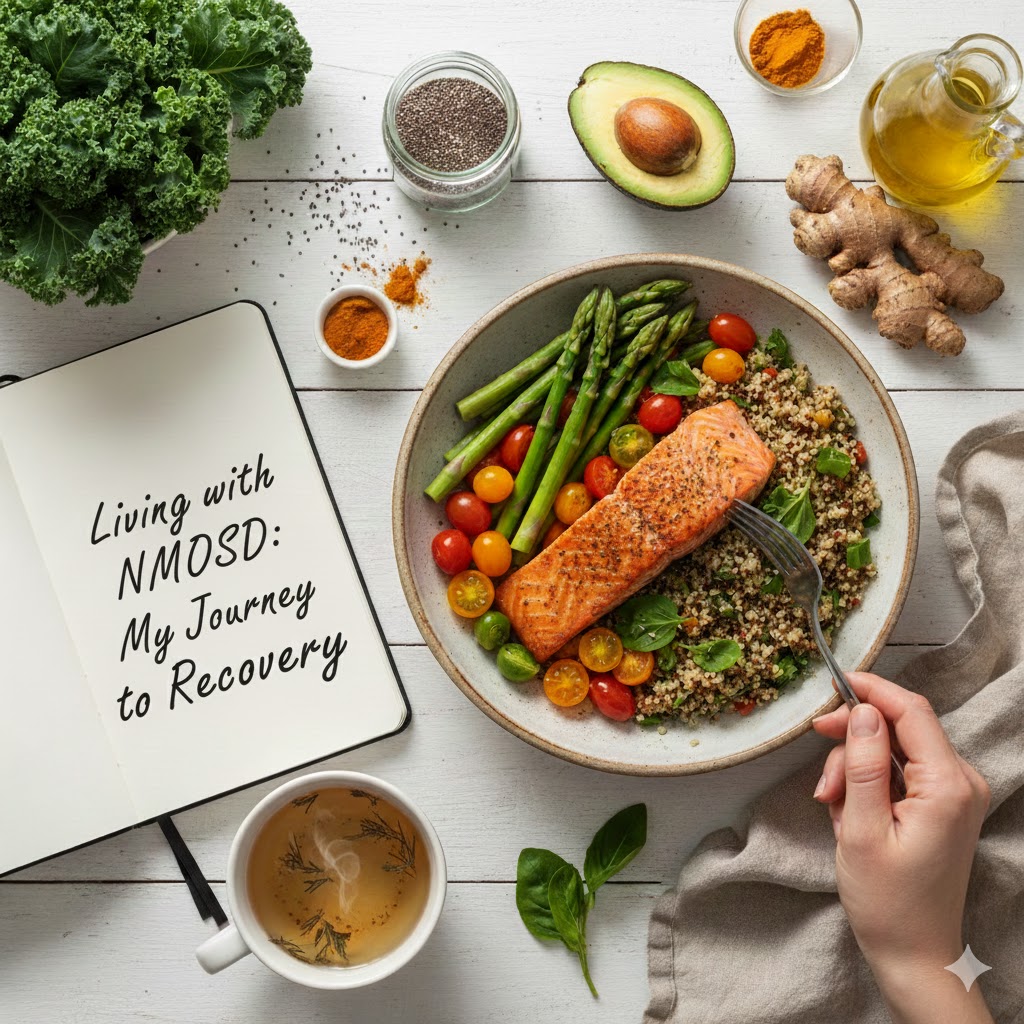
Living with NMOSD: My Journey to Recovery
Understanding NMOSD
Let’s look at some “medical Scrabble” terms to clarify what NMOSD actually entails. The primary symptoms of NMOSD are optic neuritis or transverse myelitis.
- Optic neuritis is an inflammation of the optic nerve, which leads to eye pain. You may suffer from blurred vision and changes in how you perceive the color red. While this often occurs in one eye, it can affect both.
- Transverse myelitis is an inflammation of the spinal cord. The symptoms vary depending on where the inflammation is located in the spinal cord, as it affects specific parts of your body. In my case, my bladder and leg were affected, and I could no longer move my toes. It was a terrifying experience, and I was unable to urinate.
My neurologist taught me that pain isn’t always directly neurological, but it can certainly occur as a symptom of inflammation. Mild to severe paralysis of the lower limbs can occur (think of my feet, toes, and bladder). Depending on the affected area, you may suffer from a stiff neck, back or limb pain, and/or headaches. Fortunately, my symptoms disappeared within a week after being treated in the hospital with an IV drip of Prednisone. Are you still experiencing symptoms from your attack, or have you (nearly) fully recovered?
Living with NMOSD: My Journey to Recovery
Treatment
Do you also have NMOSD? If so, you’ve likely experienced that acute attacks are treated with high-dose intravenous corticosteroids. In my case, it was Methylprednisolone—as much as a full liter per day! A major downside for me was the extreme fluid retention, but in truth, I was just grateful the attacks were stopped. I was terrified of going blind or becoming paralyzed.
For long-term immune suppression, you will likely be prescribed immunosuppressants. The most common are corticosteroids and Azathioprine (Imuran). These medications suppress and reduce the activity of your immune system. However, be careful with these medications! They can have serious side effects. For instance, they increase the risk of skin cancer; therefore, always apply a high-quality sunscreen. Protect your skin as much as possible and stay out of the sun when you can.
Other side effects can include liver damage, fever, dizziness, and weight loss. I personally took Prednisone and Azathioprine for years. At the time, I thought this was the only way to calm my immune system.
Living with NMOSD: My Journey to Recovery
Gluten-free? Seriously?
Many years ago, I discovered that it is possible to calm the immune system through nutrition. Eliminating certain foods can prevent your immune system from overreacting. An increasing number of scientists are studying the link between gluten-free diets and autoimmune diseases. There is significant evidence that gluten is linked to an increased risk of autoimmune disorders and may also be related to the progression of the disease.
Fortunately, more attention is being paid to the role of nutrition in health. I regularly blog about gluten-free eating, Paleo, and the AIP (Autoimmune Protocol). These are ways to bring your autoimmune disease into remission. These diets are scientifically supported and have helped many people regain their health. Is it something for you? I can only say one thing: Go for it. Eat healthy and become a healthier version of yourself.
A final note
I want to emphasize: I am not a doctor, but an expert by experience. Do not just stop taking your medication! That would be very unwise. I tapered off my medication step-by-step in close consultation with my neurologist because I was doing so well. Always keep seeing your doctor, and remember that you can always adjust your diet alongside your medical care. Choose unprocessed foods, extra vegetables, and fruit. I wish you strength and success.
The information shared on this blog is based on my personal experience and general research. I am not a medical professional. Always consult your doctor or a qualified specialist before making changes to your treatment or diet. This content is for informational purposes only.
Sources:
Gerelateerde berichten:
 Life Expectancy with NMO, NMOSD and Devic’s
 NMOSD When Medication Isn’t Enough to Stop the Fire
 5 Facts About Neuromyelitis Optica Spectrum Disorder (NMOSD)
 How fast can NMOSD develop? Symptoms and Recovery
 What is Visual Snow Syndrome? Symptoms, Causes, and the Power of Nutrition
 Optic Neuritis Symptoms & Recovery with NMOSD